Keeping the Oak: Paving Around Mature Trees Without a Falling-Out
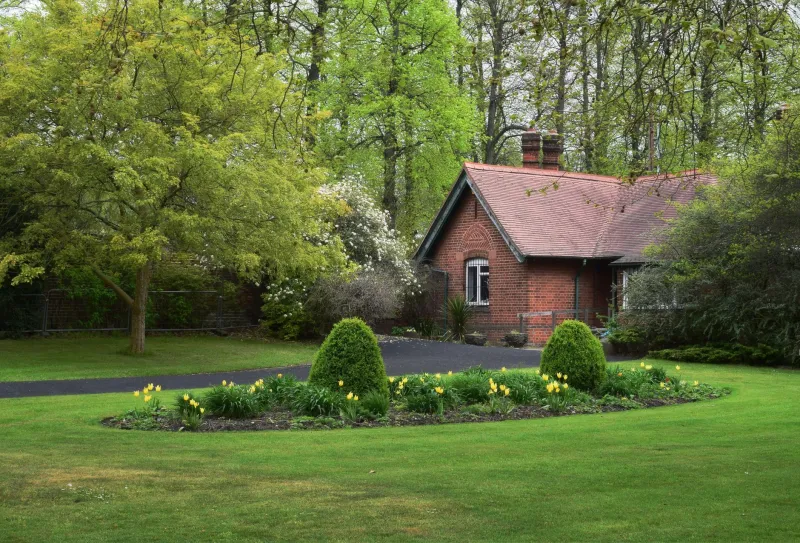
Most driveway projects begin with a dig. Near a mature tree, that is exactly where the trouble starts. The tree has been there for decades, the roots are wider than most people expect, and a standard excavation can do damage that does not show up for years. The good news is that you do not usually have to choose between the tree and the parking. You do have to change the design, the build-up and sometimes the budget.
First, work out what you are dealing with
Before anyone reaches for a digger, identify the tree and check whether it is protected. A Tree Preservation Order or a conservation area can bring extra consent requirements, and even where permitted development applies, a local authority tree officer will take an interest if construction falls within the root protection area. That area is not simply the drip line. For many trees it is calculated as 12 times the trunk diameter measured at 1.5 metres, subject to minimums and site-specific advice. It is a construction exclusion zone first and foremost, not a target to nibble away at.
If the proposed driveway or patio falls inside that zone, an arboriculturist should be involved early. Not after the quote, not after the first scrape. Early. They can confirm the root protection area, advise on levels, and tell you which construction methods are genuinely appropriate. That report is a real cost, but it is cheaper than discovering in five years that the tree is declining and the driveway has to come back up.
What the roots actually need
Tree roots are not just anchors. They need oxygen, water and soil that has not been squashed flat. A conventional driveway build-up — excavate a few hundred millimetres, lay and compact a sub-base, then add the surface — removes air, cuts roots and compacts the soil around them. Near a mature tree, that can be serious. It is not always instant death, which is what makes it tricky. The tree may struggle slowly, drop branches, thin out at the crown or show dieback years later.
A no-dig approach is the usual answer, but it is not a magic carpet. It typically uses a cellular confinement system or geogrid laid over the existing ground, with a thin layer of aggregate and a suitable surface above. The load is spread across the system rather than concentrated into a deep, compacted sub-base. Permeable joints or a permeable surface let water and air through. Edge restraints still have to be designed properly, and levels still matter — especially around the root flare and the damp-proof course of the house.
No-dig does not mean no thought
A no-dig driveway still needs engineering. Cars are heavy, and a system that works for a footpath may not work for a delivery van. The contractor should be able to show you a build-up designed for the loads it will actually take, not just a product leaflet. Drainage, falls and edge details still need sorting. If roots are encountered during the work, the job should stop and be reassessed rather than someone taking a chainsaw to anything thicker than a finger.
Root barriers are sometimes suggested, but they are not a universal fix. They can deflect roots, but they can also create problems of their own, and they do nothing about soil compaction. Use them only where an arboriculturist has specified them for a clear reason. The same goes for raising levels: a slight increase may be acceptable, but burying the root flare under 150 millimetres of stone is not.
Permeable paving earns its place here
Near trees, permeable paving is not just a drainage box-tick. It helps keep water moving into the ground and reduces the sealing effect of a solid surface. Block paving with permeable joints, permeable resin-bound systems and gravel or grid surfaces can all work, provided the base and edge details are right. The surface should not be sealed, and leaf litter needs sweeping before it turns into a compost layer that blocks the joints.
This is also where maintenance habits matter. Do not blast joints with a pressure washer at close range, and do not top up with fine sand or dust that clogs the gaps. A soft brush and a sensible autumn clear-up will do more for the surface than an aggressive clean every few years.
Where the budget really goes
A tree-sensitive driveway usually costs more than a straightforward dig, but it is rarely double. The extra money goes into the survey and arboricultural advice, a designed no-dig build-up, specialist materials, careful hand work near roots, tree protection fencing during the works, and sometimes a permeable surface. On a typical domestic drive, that can add a meaningful premium — often several thousand pounds rather than a few hundred — but it is buying a driveway that does not mortgage the tree.
Be wary of a quote that is suspiciously cheap and promises a no-dig build with no design. Be equally wary of a contractor who says the tree will be fine because roots go down, not out. They do both, and the shallow ones are the ones that matter most.
When the tree is simply too close
There are honest limits. If the trunk is right against the proposed edge, if major surface roots cross the whole parking area, if the tree is already in decline, or if the only way to get the driveway in is to cut a significant root plate, a different layout is usually the better answer. That might mean parking further from the tree, using a gravel or grass-grid overflow area, reducing the width of the drive, or keeping the paving on one side and the tree in a generous planted bed.
Leaving the root flare clear and giving the tree some uncompacted ground is not a compromise. It is the detail that lets both elements settle in together.
A sensible order of work
Start with identification and protection checks, then bring in an arboriculturist if the root protection area is in play. Get a build-up designed for the loads and the tree, not copied from a standard driveway detail. Protect the root zone during construction with fencing, and keep cement wash, fuel and stored materials out of it. Choose a permeable, unsealed surface where it suits the design, and plan for leaf clearing and gentle maintenance.
A mature tree adds shade, screening and a great deal of value to a front garden. Paving around one is not a case of refusing to dig. It is a case of digging only where you must, building lighter where you can, and getting the right advice before the first bucket moves.