Block Paving vs Resin Bound: Which Driveway Surface Actually Earns Its Keep?
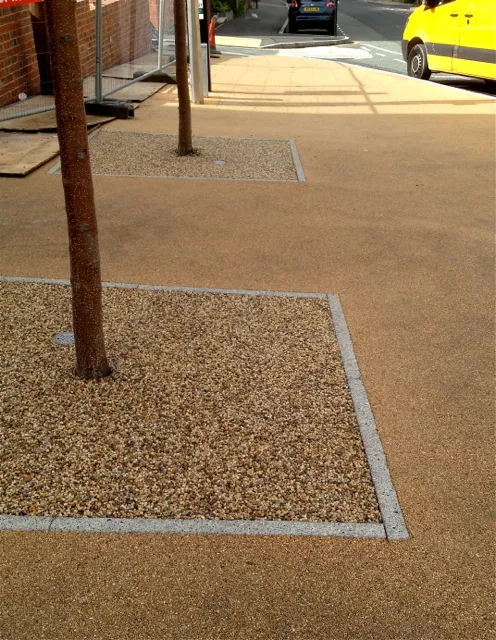
Photo: Robin Stott , CC BY-SA 2.0, via Wikimedia Commons
The short answer, before the sales pitch
There is no single winner. Block paving and resin bound do different jobs well, and the best surface for your home depends on the base underneath, the way you use the driveway and how much maintenance you are prepared to do. Anyone who tells you one is always better is selling something.
That said, an honest contractor will usually have a view. Block paving is the more repairable, more familiar option. Resin bound is the smoother, more seamless option. In 2026, resin bound is still having a moment on Instagram, but trends are a poor reason to spend thousands on a driveway.
Upfront cost: resin usually asks more, but check the base
As a broad rule, block paving sits in the middle of the market and resin bound often comes in higher. The resin itself costs more, and the installation is less forgiving. But the headline price is not the whole story. A cheap block driveway on a bad base will cost more over time than a properly built resin driveway. Equally, a resin quote that looks too good to be true usually is: thin resin, poor aggregate or a skipped sub-base will show up within a few winters.
Ask for an itemised quote. You want to see excavation, sub-base, drainage, edge restraints, membrane, jointing or resin, and waste removal. If two quotes are thousands apart, find out what has been left out.
Maintenance: block needs more input, resin needs more care
Block paving is not high-maintenance, but it is not maintenance-free. Joints need topping up with kiln-dried sand every few years. Weeds can appear. Moss likes shaded areas. You can jet wash it, but gently, and you should expect to re-sand afterwards. The upside is that individual blocks can be lifted and replaced if they crack or if you need to access a drain.
Resin bound has no joints for weeds to exploit, and it looks neat for longer with less fuss. But it is not invincible. Leaves and dirt can clog the surface, moss can grow on shaded areas, and oil stains can be stubborn. Repairs are possible, but a patch is more visible than a replaced block. If the base fails, resin will crack or lift, and fixing it is not a simple DIY job.
If repairability matters to you, block paving wins. If you want the smoothest possible finish and are willing to keep it clean, resin bound is appealing.
Drainage and planning: both can work, but only if built properly
Both surfaces can be permeable, but only when the whole system is designed that way. Block paving is permeable when the joints and sub-base allow water through. Resin bound is permeable when the resin and base are specified correctly. Neither works if the installer has simply laid them over an impermeable surface with nowhere for water to go.
In the UK, front garden paving over 5 square metres can need planning permission if it is impermeable and does not drain to a permeable area. Permeable surfaces are usually exempt, but the rules are specific. A reputable contractor should be able to explain how your driveway deals with rainwater and whether you need to check with the local authority. Do not accept a vague answer about drainage.
Weather performance: the base matters more than the surface
UK winters are a test. Freeze-thaw cycles, wet autumns and occasional heavy rain will find weak spots. Block paving can move slightly with ground movement, and individual blocks can settle. Resin bound is rigid, but it can crack if the base flexes or if water gets underneath. Both need proper excavation, compaction and edge restraints.
In general, block paving copes well with minor movement because it is flexible. Resin looks more monolithic, but that also means it is less forgiving. A block driveway can often be re-sanded and re-compacted. A resin driveway with a failed base may need a larger repair.
Appearance and longevity: classic versus contemporary
Block paving suits period homes, cottages, Victorian terraces and properties where a traditional look matters. It comes in many colours and laying patterns, and it can be refurbished over time. The downside is that a busy pattern or poor colour choice can date quickly, and the surface can look untidy if joints are not maintained.
Resin bound gives a seamless, modern finish with a wide range of aggregate colours. It works well on contemporary homes and curved layouts. The risk is that it becomes the driveway equivalent of a fashionable kitchen: smart now, but not necessarily timeless. Longevity depends almost entirely on installation quality. A well-built block drive can last decades with maintenance. A well-built resin drive can also last a long time, but it is less forgiving of shortcuts.
The verdict
Choose block paving if you want proven performance, easier repairs, a traditional look and a more predictable budget. Choose resin bound if you want a smooth, joint-free finish, are prepared to pay for a proper base and accept that repairs may be more visible.
Do not choose either because it is trending. Ask about the sub-base, drainage, edge restraints, warranty and previous local jobs. Look at samples in daylight, not just on a screen. And remember that the best surface is the one installed properly for your property, not the one that photographs best.