The Roofline Sets the Rules: Fitting Paving Around Gutters, Downpipes and Splash Zones
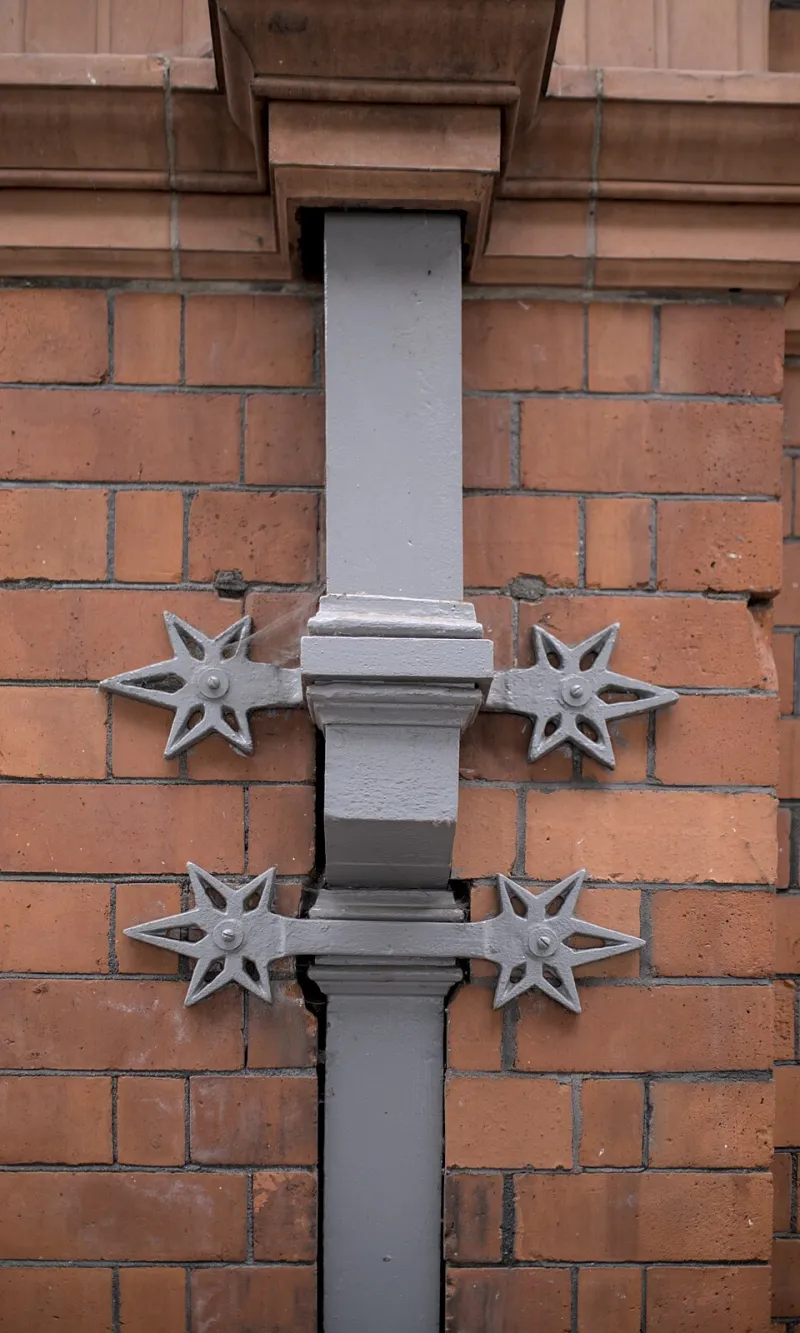
Photo: Bob Harvey , CC BY-SA 2.0, via Wikimedia Commons
A new driveway is usually judged in its first week: clean edges, fresh jointing, a nice bit of kerb appeal. The real test arrives in February, when a downpipe empties half the roof across the paving and the surface either takes it in its stride or shows you exactly where the low spot is. Roof water is not a small detail. On a typical British house, a single downpipe can deliver thousands of litres a year, and in a heavy shower it arrives in sudden, concentrated bursts. If the paving has not been designed for that, the water will find the weakest point and make itself at home.
Start With the Roof, Not the Drive
It is tempting to design paving around the car, the gate and the front door, then think about drainage at the end. That order almost always causes trouble. Before any sub-base goes down, walk the roofline and mark where water actually leaves the building. Gutters, valleys, dormers and flat-roof outlets all produce discharge points, and each one needs a route. A Victorian terrace might have two downpipes at the front and one at the back; a modern house may have several smaller outlets and a soakaway already buried under the lawn. The paving has to fit around those realities, not the other way round.
A useful habit is to sketch the roof plan on a piece of paper and mark every downpipe with an arrow. Then sketch the driveway. If any arrow points straight at a new surface with no plan, that is your first job. It is far cheaper to adjust a downpipe shoe or add a channel before the paving is laid than to lift slabs later because a corner has started to sink.
The Downpipe Is a Point Load of Water
A gutter spreads water along a horizontal run. A downpipe concentrates it into a single point. That is why the paving directly beneath an unmanaged downpipe often looks older than the rest of the drive: the jointing is darker, the surface may be stained, and the sub-base can be quietly washing out beneath it. In cold spells, that same point becomes the first place to freeze. In summer, it becomes the first place for algae and moss to get a foothold.
The simplest fix is to stop the downpipe discharging directly onto the paving. A shoe or diverter can send water sideways into a gully, a water butt or a gravel-filled French drain. If the downpipe must terminate near the drive, give it a proper receiving point rather than letting it splash onto the stone. A small cast-iron or plastic gully with a leaf guard, set just below the paving level, will do more for the long-term appearance of the drive than an extra coat of sealer ever will.
Falls, Gullies and Channels: Giving Water a Route
Paving needs a fall, but a fall is only useful if it leads somewhere. For most domestic driveways, a fall of about 1 in 60 to 1 in 80 away from the house is a sensible starting point, with the exact figure depending on the surface and the layout. Patios often sit at a similar gradient. The important thing is that the water has a visible destination: a linear channel, a gully, a soakaway or a controlled discharge to a lawn or border.
Linear channels are excellent where a downpipe, a sloping drive and a doorway all meet. They intercept water before it reaches the garage or the front step, and they look tidy when set flush with the paving. A simple gully is often enough for a single downpipe, but it needs to be positioned where water actually arrives, not where it is convenient to dig. If a driveway has several low points, one central gully will not save you. Water will pool at the edges and undermine the jointing.
Soakaways and the Ground Beneath
In many UK gardens, the default answer to roof water is a soakaway. That can work well, but only if the ground is suitable. Clay-heavy soils, common across large parts of the country, do not accept water quickly. A soakaway that was sized for a small roof may struggle when a new driveway sends more water its way. Before relying on one, check where it is, what it drains and whether it has any capacity left.
Building Regulations Part H is relevant here, particularly for new paving and drainage work. In simple terms, rainwater should not be sent into the foul sewer, and surface water needs a proper route. On a practical level, that means thinking about roof water, driveway runoff and the existing drainage as one system rather than three separate problems. If the ground is poor, a lined attenuation crate or a controlled discharge to a suitable area may be more realistic than a traditional soakaway.
Splash, Staining and the Wall Line
Even when the main flow is handled, splashback can spoil the finish. Water hitting a hard surface at speed will spatter the adjacent wall, the door and the paving itself. A gravel margin, a drip strip or a row of setts between the downpipe and the wall can absorb the impact and keep the stain line lower. This is especially useful on north-facing walls, where damp and algae already have the upper hand.
Staining is not usually a sign that the paving is failing. It is often a sign that dirty roof water is landing in the same spot. Cleaning the gutters, fitting a leaf guard and redirecting the outlet will do more than scrubbing the slabs every spring. If the downpipe discharges over a pale porcelain or light concrete surface, consider a discreet channel or a planted border rather than letting the water sheet across the paving.
The Details That Get Missed
Two things are routinely overlooked. The first is the overflow. A water butt or a gutter that overflows in a storm will send water exactly where the downpipe used to. The second is the route between downpipes. On a long drive, water from one outlet can travel along the jointing and collect at the lowest point, even if each individual downpipe looks properly connected. A fall that runs consistently in one direction, with an intercepting channel where needed, is more reliable than a patchwork of local fixes.
A Word on Maintenance
None of this is fit-and-forget. Gullies need clearing, channels need lifting occasionally, and downpipe shoes can be knocked out of place by a wheelbarrow or a car. A quick check after the first heavy autumn rain will tell you more than any drawing. If water is sitting against the house, running across the paving or disappearing into a joint, deal with it before winter. Paving is durable, but it is not immune to water that has been given nowhere to go.
Roof water will always arrive. The job is to make sure it arrives somewhere sensible.