Making a Compact Front Garden Earn Its Keep: Parking, Storage and a Clear Route to the Door
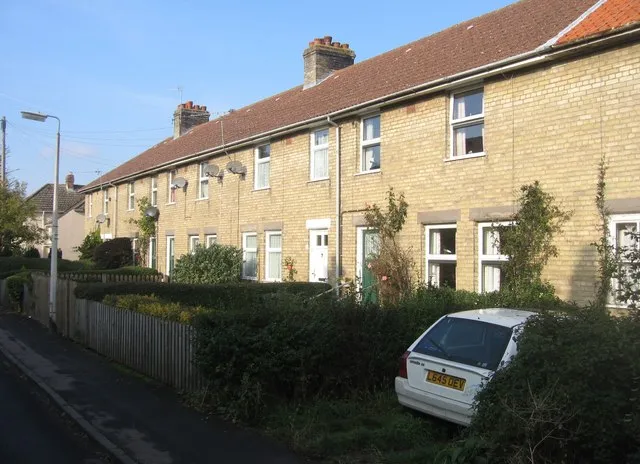
Photo: Sebastian Ballard, CC BY-SA 2.0, via Wikimedia Commons
British front gardens are not getting bigger. On a typical terraced street or suburban semi, the space between the house and the pavement now has to absorb a car, wheelie bins, recycling boxes, bikes, maybe a scooter, and a route to the front door that does not involve hurdles. Paving every inch is one answer, but it is rarely the best one. A compact driveway works harder when it is designed around the way the household actually moves.
Start with the daily routine, not the catalogue
Before anyone talks about block paving or porcelain, walk through a normal week. Where does the car stop? Which side does the driver get out? Where do the bins wait on collection day? How do bikes get from the street to the back garden? Is there a pram, a delivery, or a mobility aid to think about? These small movements decide the layout more than any brochure image.
One bay is often enough — if it is the right bay
A single parking space does not need to be enormous, but it does need to suit the car that actually uses it. Measure the vehicle, allow for opening doors, and keep a sensible margin from walls, hedges and the house. On narrow plots, an angled bay can feel easier to use than a straight one, but check that it does not push the pedestrian route into a tight squeeze. Keeping a little planting or a soft edge can stop the front garden looking like a car park with a house attached.
Turning space and the dropped kerb reality
Not every driveway needs room to turn a car around. Many people reverse in or reverse out, and that is normal. What matters is visibility, a safe crossing point over the footway, and a dropped kerb that has been agreed with the council. A dropped kerb is not a decorative extra; it is a permission and construction issue. Check access widths, sightlines and whether the local authority has any front garden or parking restrictions before work starts.
Give the bins a home that is not the front door
Bins left by the door make even a good driveway look untidy. A simple bin store or screen can keep them out of sight while still allowing them to be wheeled out on collection day. Leave enough space for the lid to open and for recycling boxes to be lifted without knocking the car. A low wall, timber slats or a planted screen can soften the look without blocking access. Just do not tuck bins somewhere that requires moving the car every Thursday morning.
Bikes need weather protection and a anchor point
Bikes left outside get used less. A small bike shelter at the side of the house, or a lockable store that fits the width of the plot, can make a front garden much more useful. Think about how the bike is wheeled in, where it is anchored, and whether the shelter blocks light or sightlines. On a tight plot, a vertical bike rack or wall-mounted hook inside a covered store can save a surprising amount of space. It is also worth checking that the store does not obstruct the pavement or create a hiding place near the door.
Keep the pedestrian route clear
A driveway is also a path. Aim for a clear, step-free route to the front door that is wide enough to use comfortably with shopping or a pushchair. A change in material can mark the walking route without creating a trip hazard. Keep levels gentle, avoid loose gravel on the main path, and make sure the route does not depend on walking through the parking bay when the car is in.
Choose materials that suit a small space
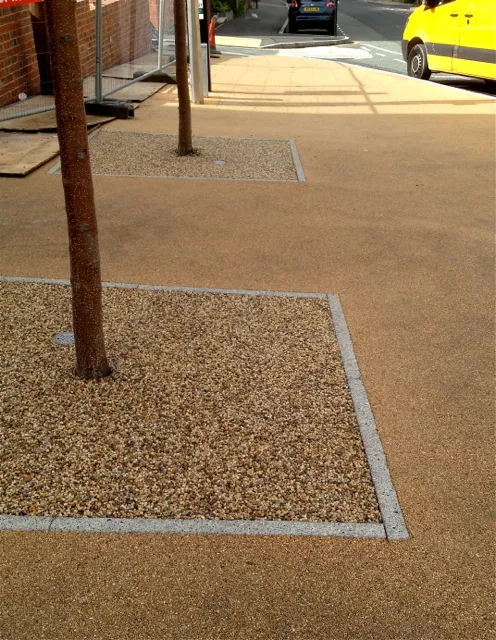
In a compact front garden, lighter tones and simple layouts can make the space feel larger. Block paving gives a traditional look and is easy to repair. Resin-bound can feel smooth and seamless, but it needs a sound base. Porcelain can look sharp and clean, though it needs careful laying and drainage. Permeable surfaces are worth considering where run-off is a concern. Whatever the material, the edging and sub-base still do the quiet work, so do not let a small plot become an excuse for a shallow build.
Lighting should guide, not glare
A couple of low-level lights can make a driveway easier to use in winter without turning the front garden into a runway. Warm wall lights near the door, or small bollards along a path, are usually more useful than a single bright floodlight. Keep the dark sky in mind, and position lights so they do not shine into bedrooms or across the road.
Planning and drainage are part of the design
Front gardens are not a free-for-all. Permeable paving, drainage and the amount of hard surface can matter, especially where run-off goes to the road. In conservation areas or on older properties, there may be extra considerations. A dropped kerb needs council approval, and not every front garden has the visibility or access to get one. These checks are easier before a design is fixed than after the paving is ordered.
A small driveway can still feel generous if it is organised. Park in one clear place, store the bins and bikes where they belong, keep the walk to the door simple, and let the materials and edges finish the job properly. The result is not just more parking. It is a front garden that works on a wet Tuesday in November.