Stone Over Timber: Why the British Garden Is Quietly Losing Its Deck

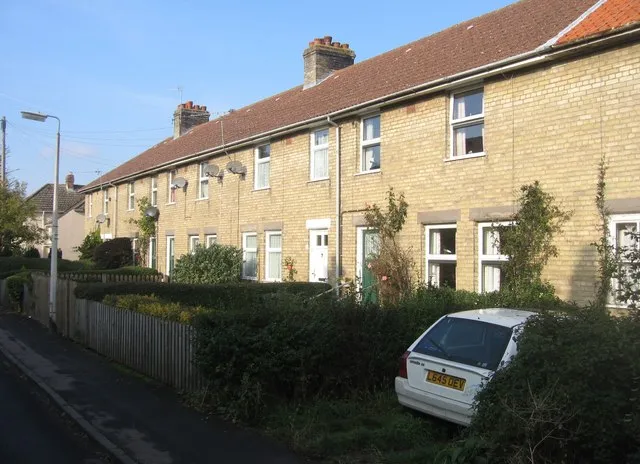
Photo: porcelain patio paving replacing old timber decking in UK garden, via www.moustachemagazine.com
We get asked to quote for decking less often than we used to. That's not a scientific survey, just what we see from the van. Where five years ago a garden redesign often ended with a timber deck, now the conversation usually lands on porcelain, sandstone or block paving, and quite often it starts with the words "we're sick of the deck".
This isn't a hit piece on timber. There are gardens where decking is genuinely the right answer. But the reasons people are moving away are fairly consistent, and they're worth setting out honestly if you're weighing up the same decision in 2026.
The wet-weather problem nobody warns you about
British weather is the obvious factor, and it's not really about rain in general. It's about the specific combination of damp, shade and mild temperatures that grows a thin film of algae on timber faster than anything else.
A north-facing deck under a fence line will go green. In November, before the sun has done anything useful, a damp board is genuinely slippery, and it stays that way until spring. Composite boards are better on rot but can be just as slick when wet, and some of the early boards on the market have weathered in ways that weren't in the brochure.
Stone is not magically grippy, and a polished porcelain in a wet garden would be a bad idea. But a textured porcelain, a riven sandstone or a decent block paving surface gives you something predictable underfoot, and it doesn't need a scrub down every autumn to stay that way.
The job that gets done three times and then never again
Decking needs work. Oil, stain or a proprietary treatment, usually once a year, plus a clean down and a check for anything loose. In practice, most people do it properly for the first two or three years and then life gets in the way.
That's not laziness, it's just how it goes. The trouble is that the wood doesn't care about your intentions, and by year eight the boards are grey, splitting and cupping, and someone is standing on it saying "we should probably replace this".
Compare that with a patio. Sweep it, occasionally re-sand the joints, jet wash it when it looks tired. There's maintenance, but it's an afternoon rather than a weekend, and it doesn't need to happen every year on a schedule.
What's going on under the boards
This is the part that surprises people. A raised timber deck hides its own structure, which means you don't see the joists until something feels bouncy underfoot.
By then the ledger board against the house may have been quietly soaking up damp for a decade, the ventilation gaps may be blocked by leaf litter, and the whole frame may be closer to the end than the boards on top suggest. We've lifted decks where the surface looked tired but serviceable and the frame underneath was fit for the skip.
Stone doesn't have a hidden frame to rot. It sits on a properly built sub-base, and if a slab cracks, you can lift and replace one piece rather than contemplating a whole structure.
The point nobody mentions at the garden centre
Decking can complicate a sale. Not always, and not dramatically, but a raised deck is a structure, and structures get asked about. Surveyors flag them, buyers ask for paperwork, and lenders occasionally want reassurance about balustrades and fixings.
A paved patio is hard landscaping. It's visible, it's inspectable, and it doesn't generate the same set of questions when a buyer's solicitor is going through the file. If you might move in the next few years, that's worth factoring in.
Where a deck still earns its keep
It would be daft to pretend stone suits every garden.
If your garden is on a serious slope, a raised deck can give you usable level ground far more cheaply than retaining walls and a paved platform. If you're working around protected tree roots and can't dig, a floating deck may be the only sensible option. Roof terraces and balconies usually need a lightweight structure rather than a sub-base. And where access is genuinely terrible, decking can be carried through a house in manageable pieces where stone can't.
There's also a budget argument. A simple deck on a modest frame can cost less than a properly built patio of the same area, particularly if you're comparing it with large-format porcelain.
What stone asks of you instead
Be clear-eyed about the trade. A patio needs a properly excavated and compacted sub-base, correct falls away from the house, and a base that suits the surface. It's heavier work, it takes longer, and a cheap version done without that groundwork will fail whether it's block paving or porcelain.
What you get back is a surface that should outlast the mortgage, needs very little input, can be repaired in sections, and doesn't need re-oiling in September.
The verdict
If you're at ground level, on a reasonably flat site, and you want something you can walk on in wet trainers without thinking about it, stone is usually the better long-term buy. If your site is sloping, root-constrained or genuinely awkward, a well-built deck remains a perfectly good answer — provided someone actually maintains it.
The worst outcome is the middle ground: a timber deck installed because it was the cheaper quote, never treated, and replaced within a decade. That's not a saving. It's a delay.