Salt Isn’t the Villain: A Smarter Winter Routine for Paved Driveways
Every winter the same question lands in the inbox: will salt wreck my driveway? The honest answer is that salt is not a silent destroyer lurking in the grit bin. It is a tool. Used sensibly, it keeps a sloping drive safe on a freezing morning. Used like a farmer feeding cattle, it can leave joints hollowed out, concrete looking scuffed and borders wondering what they did to deserve the run-off.
The trick is to stop treating de-icing as a battle between you and the weather. Think of it as a short, controlled intervention — then clear up afterwards.
What rock salt actually does
Salt lowers the freezing point of water, which is why a light scatter can stop a frost turning into a skating rink. It does not melt ice instantly, and it needs a bit of moisture to get going. That matters because brine is the active ingredient. Brine is also very good at finding its way into joints, pores and hairline cracks.
On paving, the usual problems are not dramatic. They are slow and annoying: efflorescence — that white bloom on concrete and block paving — joint sand washing away, surface scaling on weaker concrete, and salty run-off creeping into planting beds. None of that means you should ban salt from the property. It means you should use less of it, sweep up what remains, and pay attention to the details that hold the driveway together.
The surfaces, without the scare stories
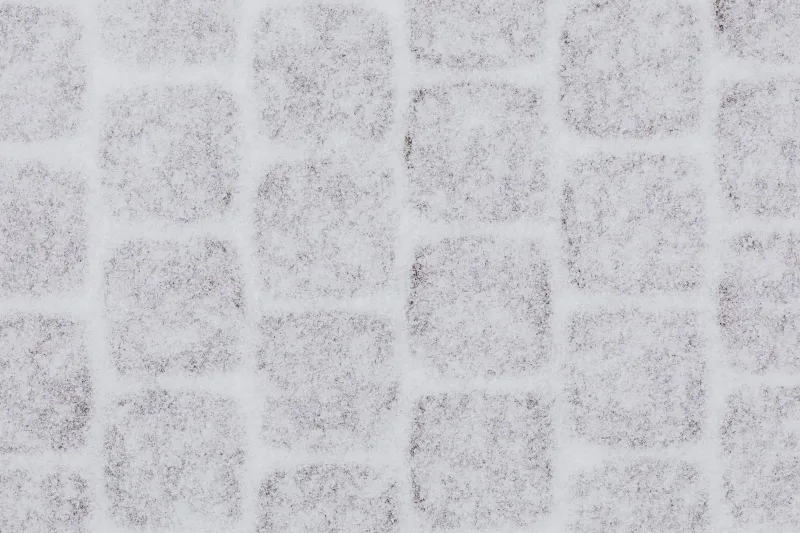
Block paving is tougher than many homeowners think. The blocks themselves will generally shrug off a British winter. The weak point is the joint sand. Brine and freeze-thaw cycles can loosen it, and once the joints are open, water gets in, weeds move in and the whole surface starts to feel a bit tired. Top up the joints before winter and check them after a cold snap. That will do more for the driveway than a panic-bought bag of salt ever will.
Concrete is where a little caution pays. A well-made, well-cured slab can handle normal winter gritting. A poor mix, an old slab with cracks, or a surface that was already scaling will be more vulnerable to salt and freeze-thaw damage. Avoid heaping salt on concrete, especially in the first year after it was laid. If the surface is already flaking, get it looked at rather than covering the problem with grit.
Natural stone needs the most respect. Sandstone and limestone are porous, and salt crystallising inside the stone can lead to surface loss over time. That does not mean a no-salt zone around the front door, but it does mean using de-icing products sparingly and choosing a gentler option where you can. Porcelain is a different animal: dense, frost-resistant and not bothered by salt in the way natural stone is. The joints and bedding still matter, so don’t let salt sit packed into the joints for weeks.
When to grit, and when to just get the shovel out
The best winter routine starts with mechanical clearing. A shovel, a stiff broom and a bit of effort will remove most snow before it turns to ice. Gritting over a thick layer of snow is mostly a waste of salt. Clear first, then apply a thin scatter only where ice is forming — slopes, shaded patches, the route to the door, the bit where the car turns.
A handful per square metre is plenty in most domestic settings. More salt does not mean more safety; it means more brine heading for the joints and the flower beds. Avoid gritting a dry driveway in anticipation of a frost that may never arrive. And after a thaw, sweep up the residue rather than washing it into the borders. A gentle rinse is fine where drainage allows, but don’t turn the hose on a pile of salt and call it cleaning.
The alternatives, ranked sensibly
Calcium magnesium acetate — usually shortened to CMA — is the polite option. It is less corrosive than rock salt, works at lower temperatures and is kinder to concrete, stone and planting. It also costs more, which is why most people use it selectively: on a natural stone patio, around a new concrete driveway, or on a route where run-off reaches delicate borders. It is not magic, but it is a sensible upgrade where the surface genuinely warrants it.
Sand is a grip aid, not a de-icer. It gives traction on ice but does not melt anything, and it can clog drains if you go mad with it. Use it sparingly on paths and sweep it up later. Plain mechanical clearing remains the most underrated option. A scraper and a broom cost nothing, don’t add salt to the soil and won’t upset a newly laid surface. Hot water is a false friend: it melts the ice and then freezes again, often worse.
A realistic winter routine for 2026–27
Before the first hard frost, sweep the driveway, top up joint sand on block paving, clear leaves from drains and check that water is running away from the house rather than sitting on the paving. If the surface is sealed, make sure it is actually due for a top-up rather than slapping on another coat for the sake of it.
When ice is forecast, clear snow early and grit lightly where it matters. Keep salt away from borders and out of the joints where possible. After the thaw, sweep up grit and sand, check the joints and make good any hollows. On new paving, go easy for the first winter and use CMA if you really need a de-icer.
And finally, a note on over-coddling. Block paving is not made of sugar. Porcelain is not a delicate flower. Concrete is not doomed by one bag of grit. The surfaces that suffer most are the ones with ignored joints, poor drainage and a history of rough treatment. A little salt, used with a bit of thought, is usually better than a fall on the steps. The greedy part of winter gritting is not the ice — it is us, reaching for the scoop one more time when the driveway was already clear.